
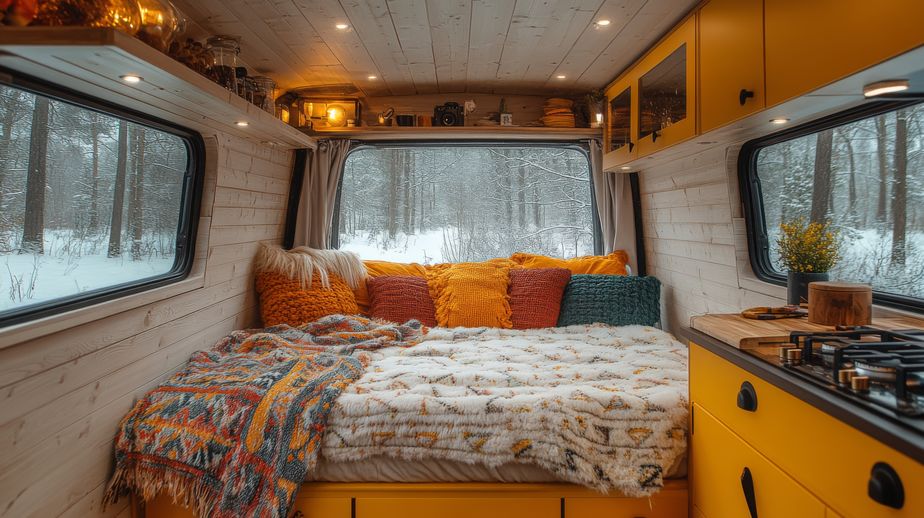
 Living on a converted bus (“skoolie”) can be an amazing experience — freedom, mobility, and adventure all rolled into one, but when winter rolls around, your home on wheels needs some serious prep to stay warm, safe, and road-ready. Whether you’re heading into a cold climate for the first time or just want to make sure your setup is solid, these six steps will help you winterize your bus conversion effectively.
1) Start With a Full Vehicle Inspection
Before you settle in for winter, treat your bus like any other vehicle. Have a trusted mechanic inspect major systems or carefully run through a self-check. Key things to review:
- Engine fluids (coolant, oil, etc.) and coolant protection level
- Battery health
- Windshield wipers and washer fluid (for snow or slush)
- Tire pressure and tread depth
- Heating system functionality
- Brakes, suspension, steering, and general road-readiness
A cold-weather breakdown can be more than annoying when you’re living on the road. Better to catch any issues before snow or ice shows up.
2) Insulate Water Lines and Tanks
One of the biggest winter threats to skoolie living is frozen pipes. Protect all your plumbing lines, including fresh, gray, and black water tanks, with foam pipe insulation and heat tape. If possible, use a heated water hose to keep water flowing and prevent freezing. This step helps avoid leaks, bursts, and unpleasant cold surprises in the middle of the night.
3) Shield Windows and Doors
Heat can get sucked out quickly through windows and door seams. Combat that by using thermal-lined curtains and foam insulation sheets (such as Reflectix), cut to size for your windows. Add weather stripping on door edges and seal any cracks. This will help keep the warmth in and cold drafts out, reducing the load on your heating system.
4) Add Reliable Interior Heat Sources
The stock heating system may not cut it when temperatures drop into the 20s or below. You’ll want to consider additional heating options, such as a small wood stove, a diesel heater, or electric space heaters (if hookups are available). Heated blankets and rugs also do wonders for warmth and comfort. Whatever option you pick, ensure it’s safely installed, properly ventilated, and practical for long-term use on the road.
5) Park Strategically Based on Weather
Location matters when your home is on wheels. If you can, head south for the winter. If that’s not in the cards, try to find parking spots that get good sunlight during the day — it can naturally warm up your bus before nightfall. Even subtle planning like sun-facing parking can make a big difference.
6) Keep Floors (and Feet) Warm
Cold floors make any space unpleasant. Rugs, thermal socks, and insulated floor mats can help a lot. For a more advanced solution, some bus owners install a simple “skirt” around the base of the bus to block cold air from entering underneath. That extra barrier can really improve overall heat retention.
Winter does not have to mean cramped, cold, or uncomfortable — not if you take time to prepare. If you’re thinking about starting a skoolie or upgrading for a cold-weather season, it helps to begin with a solid, winter-ready bus. Las Vegas Bus Sales offers a wide range of new and used buses ideal for conversions. Browse our full inventory and request more information online to find the right vehicle to serve as your winter-ready mobile home!
