
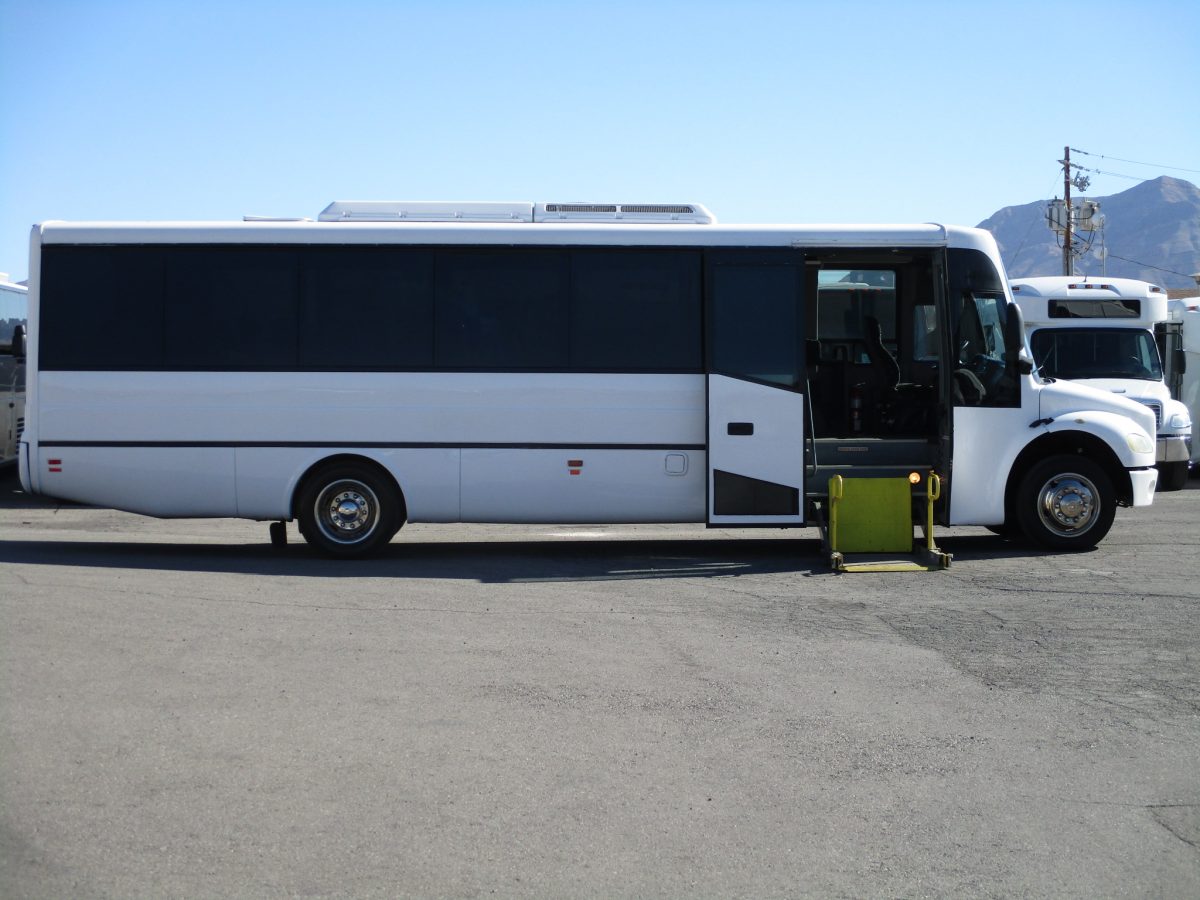
 When your organization transports passengers with mobility needs, choosing the right vehicle is about more than seating capacity and price. An ADA accessible bus should make boarding, riding, and exiting as safe and convenient as possible while still meeting the everyday demands of your transportation program.
Whether you operate a senior living community, school, hotel, healthcare organization, church, or shuttle service, here are some important factors to consider when shopping for an accessible bus.
Consider Your Passenger and Wheelchair Capacity
Start by thinking about who you transport on a typical trip. How many seated passengers do you need to accommodate? How many wheelchair positions will you regularly need?
Accessible buses come in a variety of configurations. Some prioritize traditional passenger seating with one wheelchair position, while others provide multiple wheelchair positions and flexible seating arrangements. Choosing the right configuration can help you avoid buying a bus that is either too small or unnecessarily large for your routes.
Compare Wheelchair Lifts and Ramps
One of the most important features to evaluate is how passengers using mobility devices will enter and exit the vehicle.
Depending on the bus or van, accessibility may be provided through a wheelchair lift or ramp. Consider the location of the entry point, available space for boarding, and how easily your drivers can operate the equipment during regular stops.
If you are purchasing a used vehicle, make sure the lift or ramp has been inspected and is operating properly.
Look at Wheelchair Securement Systems
Getting a wheelchair onto the bus is only part of the equation. Once inside, mobility devices need appropriate securement.
Pay attention to the location and accessibility of wheelchair securement areas. Drivers and attendants should have enough space to properly secure mobility devices without unnecessarily complicating boarding.
Think About Interior Space
Interior layout can have a major impact on passenger comfort. Wider aisles, adequate headroom, strategically placed handrails, and enough room to maneuver mobility devices can make everyday transportation easier.
This is particularly important for senior transportation, medical transportation, and other services in which passengers may use walkers, wheelchairs, or other mobility equipment.
Consider the Type of Bus You Need
ADA accessibility is available across several vehicle types, so accessibility does not necessarily mean you need a large bus.
A smaller, accessible passenger van may work well for organizations that transport only a few people at a time. Shuttle buses provide additional capacity and can be a practical choice for senior communities, hotels, healthcare providers, and transportation companies. Schools may require accessible school buses designed specifically for student transportation.
Choosing the vehicle type based on your routes and passengers can help you get the accessibility features you need without paying for capacity you will rarely use.
Find an ADA Accessible Bus That Fits Your Needs
There is no single accessible bus that works for every organization. Passenger capacity, wheelchair positions, entry style, interior layout, route length, and budget should all factor into your decision.
At Las Vegas Bus Sales, we carry new and used ADA accessible vehicles in a variety of sizes and configurations, including lift-equipped shuttle buses, accessible school buses, and ADA passenger vans. Our inventory changes regularly, allowing organizations to compare different accessibility features and price points.
Request more information about our current ADA-accessible inventory, and our team will help you find the best vehicle to match how your organization transports passengers.