
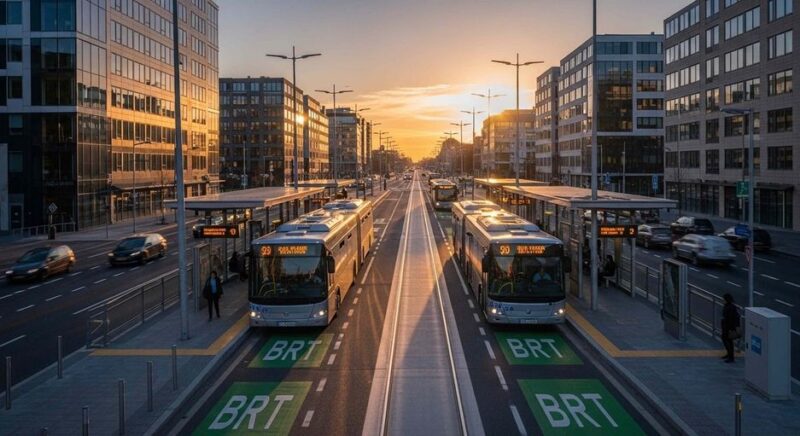
 Traffic congestion can make public transportation slower and less predictable. Even when buses run on a regular schedule, they can still get caught in the same traffic as every other vehicle on the road.
Bus Rapid Transit, commonly called BRT, is designed to address some of those challenges. By combining buses with features such as dedicated lanes, traffic signal priority, and improved boarding areas, BRT systems can help passengers travel more efficiently through busy communities.
What Is Bus Rapid Transit?
According to the Federal Transit Administration, Bus Rapid Transit is a high-quality bus-based transit system designed to provide fast and efficient service.
A BRT route may include several features that help buses spend less time sitting in traffic or waiting at stops. Depending on the system, these can include:
- Dedicated bus-only lanes
- Traffic signals that give buses priority
- Designated stations with shelters and passenger information
- Off-board fare collection
- Level or easier boarding
- Frequent service throughout the day
Not every BRT system uses all of these features, but the overall goal is to make bus transportation faster, easier to use, and more dependable.
How Do Dedicated Bus Lanes Work?
Dedicated bus lanes reserve part of the roadway primarily for buses and other permitted transit vehicles. Instead of traveling in general traffic, buses can use these lanes to move past congestion.
Bus lanes can be positioned along the curb, in the center of a roadway, or in other configurations depending on the street and transit system. The National Association of City Transportation Officials notes that dedicated lanes can reduce delays caused by traffic congestion when they are designed and maintained effectively.
Some dedicated lanes operate throughout the day, while others may only be restricted during peak travel periods. Their design and operating rules vary from city to city.
Why Can Bus Lanes Improve Reliability?
One of the biggest challenges with traditional bus service is that travel times can change significantly based on traffic.
A bus that moves freely during the morning could encounter heavy congestion later in the day. Those delays can affect every stop that follows, making arrival times less predictable for passengers.
Dedicated lanes give buses a way to avoid at least some of that congestion. When paired with traffic signal priority, buses may also spend less time waiting at intersections.
More consistent travel times can make it easier for transit agencies to maintain schedules and for passengers to plan their trips.
BRT Is About More Than Bus Lanes
Dedicated lanes are one of the most recognizable parts of Bus Rapid Transit, but they are only one piece of the system.
Some BRT stations allow passengers to pay before the bus arrives, reducing the amount of time spent collecting fares at each stop. Stations may also include real-time arrival information, weather protection, seating, lighting, and accessible boarding areas.
Frequent service is another important consideration. When buses arrive regularly, passengers may spend less time planning around a limited schedule.
Combined, these improvements are intended to make riding the bus feel more convenient and efficient.
Where Can Bus Rapid Transit Be Useful?
BRT can be particularly useful along busy transportation corridors where large numbers of people travel between residential areas, employment centers, schools, healthcare facilities, shopping districts, and other destinations.
It can also provide another option for cities that want to improve public transportation without developing an entirely new rail system.
Each community has different transportation needs, so the design of a BRT route can vary considerably. Some systems rely heavily on dedicated lanes, while others combine dedicated sections with portions that operate in regular traffic.
The Vehicles Matter Too
Roadway design and technology are important, but a transit system also needs vehicles suited to the passengers and routes it serves.
Fleet managers may need to consider passenger capacity, accessibility, fuel type, seating configuration, standing room, entry and exit points, climate control, and anticipated daily mileage when selecting transit buses.
High-capacity transit vehicles may make sense on heavily traveled routes, while smaller shuttle buses can serve other parts of a transportation network where passenger demand is lower.
Choosing the right mix of vehicles helps transportation providers match capacity with actual ridership needs.
Build a Fleet Around Your Transportation Needs
As communities look for ways to make public transportation more convenient and reliable, BRT and dedicated bus lanes offer another way to move more passengers through busy areas. However, effective transit depends on more than infrastructure. Agencies and transportation providers also need reliable vehicles that can handle the demands of daily passenger service.
Las Vegas Bus Sales carries a wide range of new and used buses for public transportation providers, municipalities, private operators, and organizations building or updating their fleets. From smaller shuttle buses to higher-capacity transit vehicles, our inventory includes options for different routes, passenger volumes, accessibility needs, and budgets. Whether you are adding a single vehicle or evaluating options for a larger fleet, our team can help you compare buses based on the type of transportation service you provide.
Browse our available inventory or contact us to find vehicles that can keep your passengers and your transportation program moving.