
 Public transportation does not always fit neatly into every community. Fixed-route buses work well in areas with consistent passenger demand, but they may be less practical in neighborhoods where riders are spread out or travel patterns frequently change.
Microtransit offers another option. By combining shared transportation with flexible scheduling and routing technology, microtransit services can help passengers reach destinations that may be difficult to access through traditional bus routes.
What Is Microtransit?
Microtransit is a shared transportation service that uses smaller passenger vehicles and flexible routes. Instead of following the same route and schedule throughout the day, vehicles are dispatched according to current passenger requests.
Riders typically request a trip within a designated service area. Routing technology then groups passengers traveling in similar directions and determines an efficient route for the vehicle.
The result falls somewhere between a traditional public bus and a private rideshare. Passengers receive more flexibility than they would with a fixed route, while still sharing the vehicle with other riders.
How Does an On-Demand Shuttle Service Work?
The exact process depends on the operator, but passengers generally select a pickup location and destination through an app, website, or reservation system.
They may be directed to a nearby pickup point rather than receiving door-to-door service. The shuttle then collects other passengers whose trips can be combined along the way.
Because routes are created around current requests, they may change throughout the day. This allows transportation providers to send vehicles where they are needed instead of operating large buses on lightly used routes.
Connecting Riders to Existing Transportation
Microtransit does not necessarily replace regular buses or rail systems. In many communities, it can support them.
One common use is providing first-mile and last-mile transportation. A passenger may live too far from a bus stop or train station to walk comfortably. An on-demand shuttle can pick up that passenger within the service zone and connect them with the larger transit network.
This can make public transportation more accessible to people who might otherwise rely on a private vehicle for the entire trip.
Serving Areas with Changing Transportation Needs
Flexible shuttle services may be useful in suburban neighborhoods, rural communities, business districts, college campuses, airports, and other areas where passenger demand varies.
They can also support transportation during evenings, weekends, or other times when operating a full fixed-route schedule may not be practical.
Organizations may use similar service models for employee transportation, senior mobility, healthcare access, hotel shuttles, and community programs. Each service can be designed around its passengers, operating area, and expected trip volume.
Why Vehicle Selection Matters
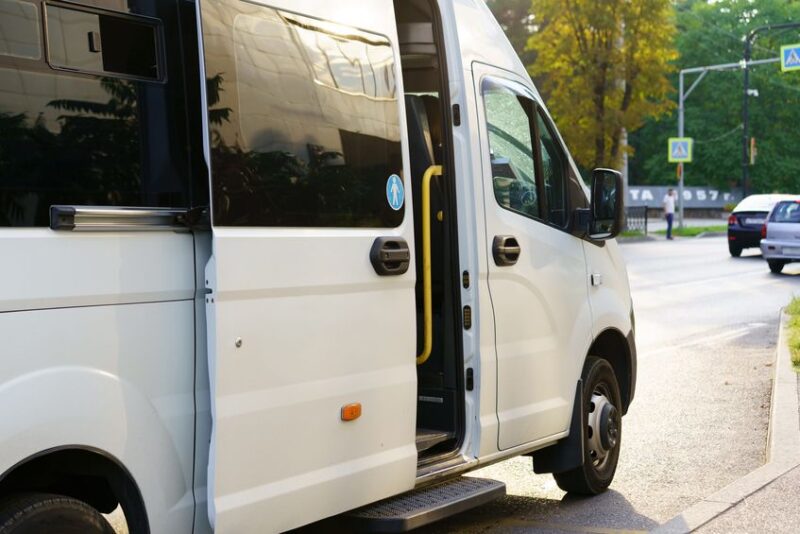
A successful microtransit program needs vehicles that match the service area and its passengers. Larger vehicles may provide more seating, but smaller shuttle buses can be easier to maneuver through neighborhoods, parking areas, and busy city streets.
Transportation providers should consider passenger capacity, accessibility, interior layout, storage space, fuel type, maintenance needs, and expected daily mileage. Wheelchair lifts, low-entry designs, handrails, and flexible seating arrangements may also be important when serving passengers with different mobility needs.
The right vehicle helps operators provide dependable service without using more capacity than the route requires.
A Flexible Approach to Shared Transportation
Microtransit has developed into a practical way to fill gaps between private rides and traditional public transportation. It gives communities and transportation providers another way to connect passengers with jobs, healthcare, shopping, transit stations, and other important destinations.
At Las Vegas Bus Sales, we have a large selection of new and used shuttle buses, minibusses, and other passenger vehicles suited for community transportation, employee shuttles, senior mobility programs, and flexible transit services. Our team can help you compare available options based on seating capacity, accessibility features, storage needs, budget, and operating goals.
Browse our current inventory to begin finding the right vehicles for your microtransit program.